




It’s the service upon which Napoleon Engineering Services has hung its proverbial hat for the last 28 years.
And it’s a service that, for original equipment manufacturers (OEMs) especially, has only become more dependable.
More valuable.
More essential.
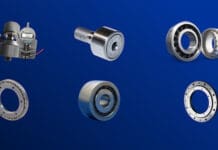
NES’ Source Qualification Inspection (SQI) program is a unique industrial bearing reverse engineering initiative. Its objective is trifold: to define a bearing manufacturer’s design intentions, to determine the manufacturing capability and to evaluate the quality of workmanship. And this is accomplished through a comprehensive evaluation of a sample population of bearings from a specified supplier.

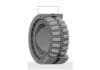
As part of its SQI, Napoleon Engineering conducts a complete dimensional inspection of a bearing, including all internal geometry. It also performs a visual inspection, noise testing and seal dimensional evaluation (if applicable) and assesses components such as material chemistry, microstructure, grain size, cleanliness and hardness. Based on that data, it then provides a detailed, analytical report on its findings to help inform a customer’s decisions regarding potential bearing suppliers.
A source qualification inspection, NES believes, is the first and most vital step in the bearing qualification process.
But why?
Perhaps most importantly, it precedes, and potentially eliminates, more expensive physical testing programs, especially when using product that is already known to be deficient. And this makes it the more cost-effective option.
“Dynamic testing without knowing the design, manufacturing and overall quality of the characteristics of the different suppliers limits one’s ability to make decisions and learn from any endurance testing results,” said Chris Napoleon, NES’ president and chief engineer, “and costs additional money in the future.”
Moreover, SQIs allow OEMs to openly communicate design issues with the bearing manufacturer, understand why suppliers might perform differently, accurately model bearing performance characteristics through a range of software programs and control the bearing design to ensure success in the global supply chain.

Just as beneficial: SQIs can be performed relatively quickly, with reports typically being generated within 4-6 weeks.
YES, ITS SOURCE qualification program has become one of NES’ most fundamental bearing engineering services.
And given both its value and popularity (it has executed hundreds of SQIs for several satisfied customers over the years), Napoleon Engineering Services, over the last year, has only increased its capacity in this department.
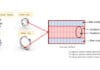
NES has invested in more inspection equipment and personnel, adding, among other things, more coordinate-measuring machines (CMMs), contour and surface measuring machines and employees to operate them. The Olean, New York-based company has also amplified the program’s value by incorporating a “digital stitching” element, in which NES inspection engineers work with inspection technicians to develop enhanced technical data regarding the interaction between a bearing’s contacting surfaces.
Additionally, source qualification inspections now also include stress and life analysis.
And these upgrades have allowed NES to perform SQIs even more quickly and accurately.
“Frankly, we’re in a position where we can take on more of these jobs because we’ve been getting them out so fast,” Napoleon noted. “Our lead time in the most critical step of the qualification process has been reduced to support the needs of our customers.”
NES HAS generally found that most customers have a baseline bearing that works in an application, but they’re not always certain why.
This is because their requirements drawing lacks critical design features and/or they’ve never conducted an analysis to determine the characteristics that allow that bearing to work. Napoleon Engineering, then, will compare new suppliers not only to the baseline supplier, but also to its internal standards and accepted industry standards.

If a decision requires further reduction in risk, dynamic testing might then be the answer.
The SQI, however, remains the linchpin – by either permitting OEMs to skip costly steps or by tying that information together.
“It has always been the missing link for OEMs to connect the design, the quality of workmanship and manufacturing capability to the physical test results out in the lab or in field testing,” Napoleon said of the program.
The crux of the program is that it exposes issues early in the inspection process. This gives the customer an opportunity to make improvements prior to the more time-consuming and expensive dynamic testing process.
“It’s cost-effective in that there’s no reason to be physically testing product that has deficiencies,” Napoleon maintained. “We should be coming into the physical test portion with a very high level of confidence that the product is going to meet life expectations. It’s the final evaluation.”

NES possesses several methods for dynamically evaluating bearings. The most common of these is an endurance testing program that allows it to examine a quantity of test bearings to failure. From these failure times, a Weibull analysis is performed to compare the theoretical L10 life to empirical life of the different suppliers.
In most cases, however, one needs only an SQI report to make a sound decision relating to bearing supply, one that mitigates risk and maximizes performance. And one that’s delivered in an effective and efficient manner.
“We’ve made these investments, and we continue to go down this path,” Napoleon said. “We’ve become a successful bearing manufacturer at our core, but our testing and inspection services are still a crucial, and valuable, aspect of our offering. And in the last year, we’ve only enhanced our ability to perform them.”
(Courtesy of J.P. Butler, Marketing Coordinator, Napoleon Engineering Services)
This article is published in Motion+Drives December 2025 issue on pages 47-49