




Correct specification, a high-quality product, and on-time delivery don’t always add up to perfect installed performance. Even with the best components, issues can arise, often unrelated to the product itself. At IKO Nippon Thompson, we know that understanding the application is key, not just for the sale, but for long-term successful operation.

The Crucial First Step: Question Everything
The sales process at IKO UK is designed to provide customers with the right bearing solution for their applications, not just the part number they request. We believe in proactive consultation to prevent issues before they occur.
General Manager Peter Howe explains IKO UK’s rigorous approach: “If a customer that we don’t know comes in and asks us to quote two of this part, we never do that. The first thing is to go back to the customer, to ask: ‘What is this for?’ ‘What’s the application?’ ‘Are you sure about that?’ ‘Where have you gotten the part number from?’ Just because they quote that number doesn’t mean it’s the right one. Is this a one-off, or pre-production, or a prototype? Where will it be in six months?”
Callum Miller, IKO UK Sales Manager, echoes this sentiment, explaining the value of this approach: “We know we have either over-specified the bearing, or specified it correctly, because we asked the right questions. We could pump out quotes all day long without looking at the applications, but the repercussions of doing that can be incredibly time-consuming.” This refers, of course, to having to disassemble an entire machine to replace an incorrectly-specified, under-performing bearing fitted within the application.
Despite such extensive precautions, not every linear bearing will always function as expected. IKO UK lists some common issues with recently-installed linear bearings, and how we fixed them.
For specific product details and technical information, visit the IKO Nippon Thompson website: www.experts-in-motion.co.uk
The Mounting Surface: The Root of Many Problems
Performance issues with linear bearings are often related to what they are bolted into. The most high-quality linear guide can be compromised by a poor mounting surface.
Linear guides, for example, are generally mounted to a bed, which should be a minimum of 6mm plate or similar structural surface. If, however, the customer is bolting into 3mm plate, doesn’t read the instructions on how to mount it, gets the holes predrilled, inserts the screws, tightens everything up, and puts the carriage on, it may only get halfway down the rail until it stops.
The common mistake here is overtightening the bolts. Since the linear guide is often the strongest part of the assembly, it warps the thinner plate, causing the carriage to lock up. That is simple to resolve: loosen off the bolts. In this situation, customers should check the thickness of the plate and consider if it is twisting.
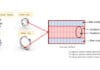
Peter further explains that depending on the design of the linear guide, the mounting surface of the carriage is a U-shaped profile. Because the bearing can take a huge load, customers tend to assume the structure is sound, he points out. But actually:
- If the guide is mounted to a surface that is convex, the profile will open, and the carriage may lock.
- If the guide is mounted to something concave, the profile will close, and the carriage will lock.
“We know the characteristics of the product and the regular problems that people come across, so we’re very quick to highlight those, and tell people to look at their mounting surface and tolerances,” Peter adds. “Sometimes simple conversations can alleviate these problems.”
The Environmental Factor: Heat and Expansion
On the subject of the rail itself, Peter recalls a case where IKO had supplied linear guides running on long sections of rail whose joints were butt-ended flush. After six months, the ends had tilted up toward each other, and the carriages wouldn’t run.
It transpired that where the machine was installed, summer temperatures were so high that the rails expanded and pushed themselves up – which was news to the IKO team, as the customer had not mentioned this during specification. Had they done so, IKO UK could have added, as a special design alteration, an expansion gap between rail ends. Such gaps could measure up to 2–3mm in linear ways with carriages fitted with a 6mm-diameter ball without affecting the running of the carriage. This demonstrates how environmental conditions, if not communicated, can directly impact mechanical performance.
The Handling Error: Balls Missing
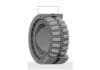
The unfamiliar technology of linear bearings can also catch some customers out. As linear bearings incorporate circuits of ball bearings, they require special handling.
Callum Miller, IKO UK Sales Manager, recently recalled a conversation where a customer said: “We have this new guide from you, and it was running a bit funny, so we turned it over, and there’s some balls missing.”
IKO UK points out that it is not physically possible for the balls to come out when a carriage is on the rail. Furthermore, our standard size linear bearings are supplied with a retaining band that prevents the balls from dropping out of the carriage when it is removed from the rail. (Only our super miniature sizes do not come with this feature.)
For the balls to be missing, the carriage must have been dropped or severely mishandled at some point, causing the balls to escape. When asked if anyone had taken the carriage off the rail, the customer was initially confused.
IKO UK explained the correct procedure: “What’s happened is, someone has improperly handled the unit. We advised customers to slide the carriages off the dummy rails they are supplied on and directly over to the actual rail assembly to prevent any ball loss. We are more than happy to attend site to demonstrate this procedure and advise on assembly techniques, or customers can send the unit back, and we’ll check and replace the balls to get it working.”
Preload and Clearance: Finding the Sweet Spot
Although not common, performance issues can also spark a change in specification. IKO UK Technical Sales Engineer Mark Turner recalls two instances where a customer requested a change in the degree of preload in the carriage.
- Preload is all about frictional resistance. The higher the preload, the higher the rigidity of the system, but also the greater the resistance; the harder it is to move.
In one insightful case, the customer was making a machine that automated laboratory sampling, by moving an array of pipettes in a tray. A different carriage handled travel on each axis (X, Y, and Z), and all of them had the same standard preload. The initial set-up was taking a lot of time and effort, Mark reports.
“We visited and looked at the application, and said, ‘You don’t need three standard products; the Z-axis travel is not that accurate. You can use a clearance carriage.’ And we bolted one in, put the carriage on and it worked,” Mark recounts.
In this case, first appearances can be deceptive. Mark adds: “When a customer takes a standard carriage out of the box and moves it on the rail, there’s minimal friction, and you think that’s fine. But when you put the two together, and interface with a structure that is not fantastically well-machined to achieve a certain price point, it performs differently.”
IKO offered the customer a product swap; we took away the 32 unused carriages and swapped them for a product with greater clearance, all for the same price. As expected, the customer’s reaction was: “‘Wow, you saved me so much time and effort, and I’d never even thought about that.’ In hindsight, it’s an obvious fix, but when you’re in the middle of a problem and dealing with the stresses of production and everything else, you’re not always thinking clearly.”
The IKO Commitment
Fortunately, IKO UK is there to help customers, both before orders to ensure the right product is specified, and afterwards to troubleshoot the sometimes complex interplay between linear guides and the machine structure. Successful motion is a partnership.
For enquiries regarding your linear motion applications, please contact via:
Email: info@iko.co.uk
Telephone: 01908 566 144
Website: www.experts-in-motion.co.uk