



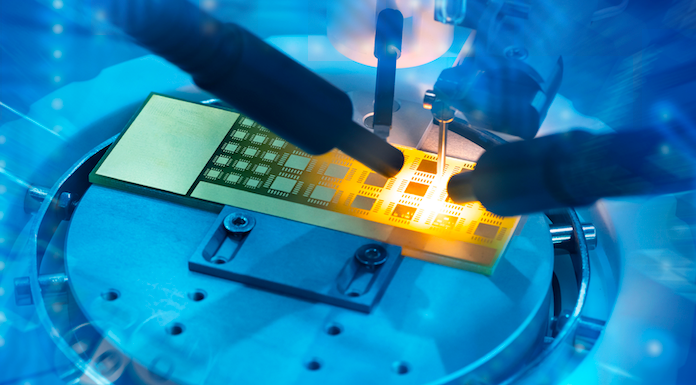
Implementing an appropriate bearing for semiconductor manufacturing involves key considerations like materials selection, lubricants and contamination prevention.
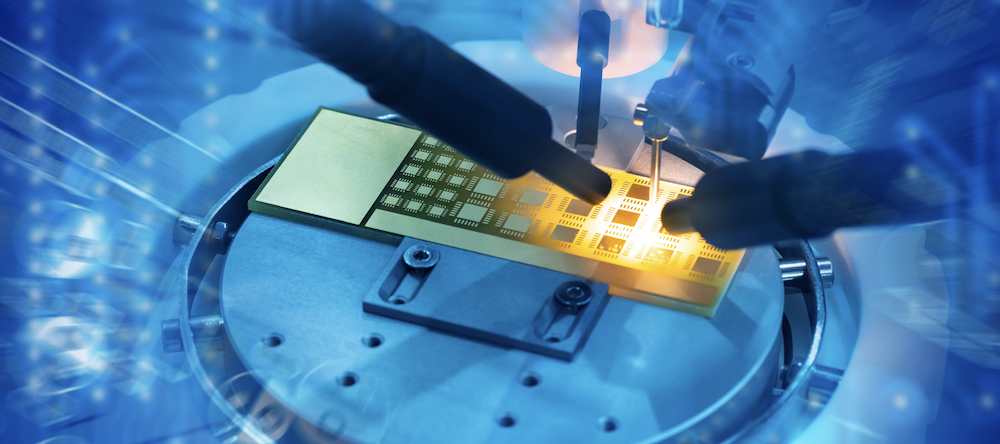
In the perpetual race to produce ever-smaller and more powerful chips, it’s not surprising that OEMs look for equipment made from the most robust materials that will perform reliably within the challenging operating environments often associated with manufacturing these devices. After all, the specialized processes to manufacture semiconductors are both extremely complex and expensive with a single device costing several million dollars and fabrication facilities costing billions of dollars to build. And, should a problem occur at one point in a process, it will affect the entire production line. That means motion components must stand up to challenging conditions with uncompromising reliability.
However, implementing a suitable motion component for semiconductor fabrication often involves trade-offs. Working with a motion specialist with both a wide variety of standard products as well as customization capabilities will give you the most flexibility to determine the best bearing or table for the application. This article will explain how they can help you navigate the tradeoffs to make informed decisions.
Stainless Steel: The Predominant Material for Motion Components
Bearing construction is a good example of the semiconductor industry’s relentless efforts to improve machine reliability, and the material used presents some of the foremost trade-offs that you will face as a specifier. For instance, bearing manufacturers commonly offer 52100 or SUJ2 high carbon steel as standard material. High carbon steel is a clean, non-toxic material with excellent durability but it is susceptible to corrosion without the maintained use of a rust inhibitor, which is unacceptable in contaminant-sensitive equipment prevalent throughout semiconductor fabs.
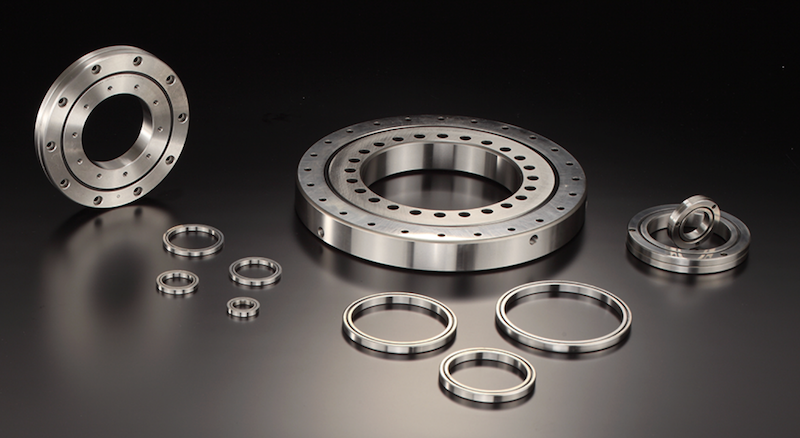
In recent years, 440C stainless steel has become the predominant material choice thanks to its chromium content and martensitic microstructure, which gives it its impressive anti-corrosive properties and enables hardening by heat treatment. With heat treatment, it can rival high carbon steel in hardness and lifetime while offering superior corrosion prevention. For these and other reasons, OEMs increasingly prefer stainless steel versus tried-andtrue high carbon steel, even during the proof-of-concept (POC) stage when developing a new machine. Despite the slightly higher cost of stainless steel, it is the material of choice for improved performance. Partnering with a bearing manufacturer connects you with specialized expertise to guide you through making informed decisions not only on material selection, but also on lubrication, packaging, and other specifications for semiconductor applications to ensure dependable performance.
Address Challenging Lubrication Trade-Offs
As mentioned, selecting and modifying your motion component for semiconductor applications involves numerous trade-offs. This is particularly true of lubrication in vacuum and hightemperature environments. In vacuums, standard greases have outgassing characteristics which cause vapors to disperse and contaminate the process. Higher operating temperatures can have an evaporative effect on the grease. The outgassing and evaporative risks make designing products that have long performance cycles at long maintenance intervals particularly challenging. Operating parameters may dictate that relubrication is in fact required, so checking with your bearing supplier to discuss the trade-offs is recommended. An ideal partner will offer a lubrication recommendation that offers a balance of high durability and low evaporation in vacuum environments while also exhibiting low outgassing and dust generating characteristics.
One such lubricant that offers a robust, noncompromising balance of high-performance and superior outgassing characteristics is IKO’s proprietary Liquid Crystal Lubricant (LCL). This new lubricant is not a grease or an oil and has an operating temperature range from 5°C to 100°C, with an instantaneous peak up to 120°C. LCL provides exceptional cleanliness, durability, outgassing, evaporative, and frictional resistance characteristics that clearly outperform traditional cleanroom and vacuum greases. IKO’s LCL is now available as a stand-alone product and is also available within IKO’s stainless steel standard lubrication-type linear guide series and IKO’s crossed roller bearing series.
For machines that do not operate in a vacuum, you can achieve smooth, long-term maintenance-free linear motion using IKO’s linear guide series with integrated C-Lube technology. C-Lube is IKO’s proprietary internal lubricating system that utilizes porous oil-impregnated polymer parts within the bearing’s internal recirculation path to provide long-term maintenance free operation up to 20,000 km (12,500 miles) or five years.
One such linear guide using IKO’s C-Lube technology is the Linear Way ML miniature rolling motion guide, which combines stainless steel components and a miniature design footprint, making it especially desirable for clean environments.
An Overview of Standard Products for Semiconductor Applications
Here is an overview of some typical motion components used for cutting-edge fabrication applications and the features that make them ideal for this industry:
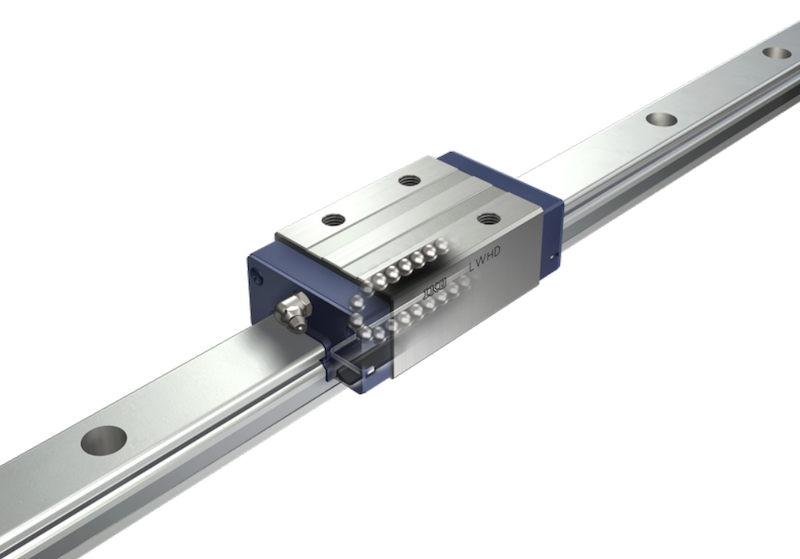
• Linear guides. Any application that requires precise positioning or involves transferring fragile and expensive wafers is well-suited for linear guides. Examples include wafer handling, inspection, photolithography, doping, etching, thin-film deposition, wafer dicing and ion implantation, to name a few. As a case in point, IKO’s ML Series linear motion rolling guides come standard in stainless steel and feature some of the smallest sizes in the industry. IKO offers many supplemental specifications and local modifications to further accommodate cleanroom and vacuum environments. Local modifications include cutting linear rail lengths to exact specifications, such as for robotic arm elevation.
• Crossed roller bearings (CRBs). Designed to handle complex kinematic motion from all directions simultaneously, CRBs offer micron-level displacement with a compact footprint for wafer handling devices, including those that have long-reaching robotic arms with several pivoting joints. CRBs are available in highrigidity configurations, can be made from stainless steel, and can also be adapted for use in cleanrooms and modified to operate in vacuum environments. IKO’s CRBFV… series is noteworthy, partly due to its design with mounting holes about the inner and outer rings that allow for simplified installation while facilitating a lowcost, yet highly precise joint.
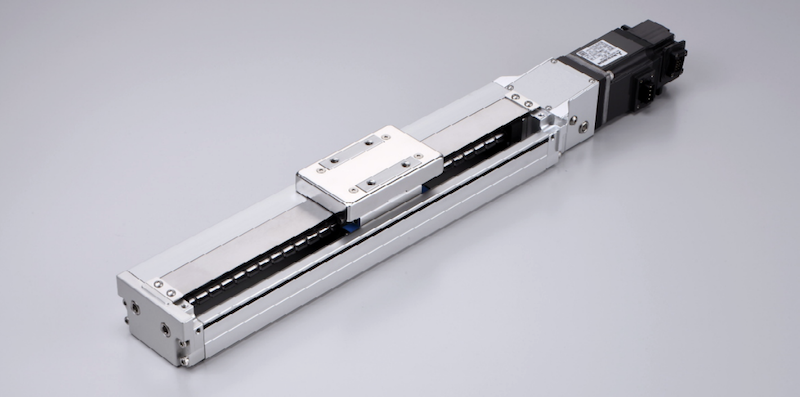
- Mechatronics. Positioning tables and stages are another effective means of guiding or positioning loads with micron precision in automated equipment used for wafer handling, inspection or picking and placing. Many compact units are available, such as IKO’s NT Series linear motor-driven table with a moving magnet design that keeps the height low and eliminates moving cables and cable carriers that can otherwise produce particles and increase thrust force requirements. Another option from IKO — the TC Series — satisfies the ISO Class 3 (U.S. Fed. Std. 209E Class 1) standard for cleanrooms. It combines lightweight and a compact size with durable, corrosion-resistant aluminum and stainless steel construction, stainless steel coverings to prevent dust dispersal and a C-Lube built-in lubrication system. The TC series also features an internal magnet strip and threaded suction ports at either end of the actuator to contain and remove particles generated inside the enclosed actuator during operation.
Optimize Your Bearings To Resist Extreme Conditions
In semiconductor manufacturing equipment, you can expect your bearings to be deployed inside a controlled setting — such as in a cleanroom or a vacuum environment — with very stringent cleanliness requirements. That makes ensuring that greases stay within the bearing especially critical, or components may be exposed to contamination that potentially hinders precision and reliability. The right motion component specialist can walk you through the trade-offs these challenges present and suggest specific products or modifications to help you satisfy your requirements. IKO offers a host of products for use in special environments, with options to address situations such as:
When you need to keep contaminants away from internal components and prevent greases from escaping:
Special environment seals may be used in lieu of a linear bearing’s standard end and under seals to prevent contamination from dust and dirt. Keep in mind that seals have limitations at higher temperatures and in vacuum environments, so consult with your bearing supplier for a suitable seal material for the conditions or consider specifying shields, where applicable.
When you need to prevent contamination in a high-temperature or vacuum environment:
Stainless steel end plates for linear guides prevent contamination and resist corrosion, making them particularly important where water, humidity, chemicals and cleaning agents are present. In hightemperature applications, use stainless steel end plates together with a high-temperature grease. However, note that not all linear guides are structured to accommodate stainless steel end plates. In that instance, ask your vendor whether an engineered plastic resin endplate specially engineered for vacuum environments can address the incompatibility.
No end seals is an option for environments where contamination isn’t a concern and the standard seal material will be a problem. Further, IKO offers precision cleaning and packaging for stainless steel products that is completed in a cleanliness Class 6 environment.
When you need to prevent rust:
Black chrome surface treatment protects track rails and slide units from rust and can be combined with an additional fluorinated resin layer to offer exceptional corrosion resistance. Or, some applications may call for omitting the rust preventative oil coating or applying a light rust preventative oil coating, combined with an anti-corrosion packaging film, such as from the ZERUST® brand. ZERUST products release a vapor that settles on part surfaces and prevents the electrochemical reactions that cause rust.
When you need a lubricant that doesn’t contaminate the environment:
Greases formulated for cleanroom environments not only offer desirable lubrication and rust prevention, they also produce minimal contaminants. For example, CG2 grease performs in a wide range of temperatures and maintains oxidational stability. Another grease, CGL, uses a blend of soaps and a synthetic base oil to provide nominal rolling resistance. Some guides can be specified without prepacked grease, which allows customers to prepack their preferred lubricant that matches the environment or other criteria. Vacuum greases can be specified on a case-by-case basis.
In addition to these options, you can also specify features such as bellows, caps for track rail mounting hole counterbores as well as scrapers or C-wipers that mount to the end seal or end plate of a slide unit to protect it against dust or other particle contamination.
When you need high rigidity to minimize deflections and dissipate vibrations:
Your bearing specialist can recommend a suitable bearing specification with good rigidity to accommodate greater loads with low deflections or dissipate vibrations. One such product is IKO’s MX roller-type linear rolling motion guide in stainless steel, which features cylindrical steel rollers that make line contact with the raceway for exceptional rigidity and load capacity. IKO linear guides are available with several preload specifications and slide unit lengths to manage rigidity. Additionally, there are several options for wide-type track rails for increased moment rigidity. For CRBs, full-complement-type bearings offer high rigidity and load handling capabilities within lower speed applications while separator-type bearings offer the same type of performance across a wider range of use cases.
The Case for Standard Products With Proof-ofConcept Designs
It’s no secret that stainless steel is fast becoming the material of choice for designers when integrating motion components into semiconductor equipment. However, early on in a device’s development — such as during the proof-of-concept (POC) stage — the benefit of using a stainless steel part is minimal. At this point, the material may not be readily available and the stainless steel advantages may go unrealized. For early iterations of a machine design, choosing standard products, such as those made from carbon steel, is often a very practical and expedient approach — especially when you evaluate products from a motion supplier with a broad range of off-the-shelf products and extensive engineering support. Following this logic, IKO’s ML series, which comes standard in stainless steel as previously mentioned, also offers several sizes in carbon steel. High-quality standard bearings will provide the performance you need as you start testing, and IKO can provide a custom-designed stainless steel version at a suitable time, such as when the design concept is in line for prototyping or beta testing.
During the POC phase, chances are you will need to start with several parts for trial and error and narrow them down to only a few custom parts. And, those custom parts take months to validate and manufacture. Using standard parts early on reduces the time requirement from months to days or weeks, provides cost savings and doesn’t incur the added expense of stainless steel. And when it’s time to migrate to a custom stainless steel bearing, the optimization steps are faster and easier.
Choose a Motion Specialist That Excels at Optimizing Products for Challenging Applications
When a semiconductor fab design calls for high-quality bearings or mechatronics, keep in mind that not all motion component suppliers are the same. As you specify components for this demanding sector, be sure to communicate your application requirements and specifications to the manufacturer early in the process. The ideal supplier will offer a wide range of products, extensive engineering support and a rich history of customizing products for challenging applications.
Many vendors recommend solutions from the limited scope of standard products and accessories they manufacture. At IKO, we’ll work with you at every step, from establishing your requirements and incorporating your specifications into the product. And, we’ll make modifications along the way to ensure your bearing performs reliably in its intended operating environment. With high-quality standard and stainless steel products together with engineering assistance and custom capabilities, IKO is your single source for advanced motion components for semiconductor fabrication machines and equipment that demand uncompromising cleanliness and reliability.
For more information, please visit our website at www.ikont.com.
Karl Wickenheisser,
VP of Sales & Marketing, IKO
Jamison Stogryn,
Regional Engineer NE, IKO
Read the White Paper Here.