



As ports and coastal operators electrify their fleets, attention is often drawn to charging infrastructure and power systems. Yet for electric and hybrid vessels, some of the most important advances are happening in the mechanical systems below deck. Industrial bearings — the components that keep shafts turning and motors running smoothly — are taking on new importance in the race to decarbonise maritime transport. Here, Chris Johnson, managing director at SMB Bearings, explains how bearing innovation is helping the marine industry navigate toward net zero.
According to the International Maritime Organization (IMO), the global fleet must cut emissions by 30 per cent by 2030 and reach net-zero by 2050. To meet these goals, shipbuilders are investing heavily in hybrid propulsion, battery energy storage and electric drive systems.
Hybrid propulsion combines traditional engines with electric motors, allowing vessels to switch between power sources for optimal efficiency and lower fuel use. Battery energy storage systems (BESS) capture and supply energy when it’s needed most — for example, during port manoeuvres or peak load periods — reducing engine wear and emissions. Meanwhile, fully electric drive systems deliver instant torque and smooth acceleration, cutting noise and vibration while enabling truly zero-emission operation in coastal waters.
While these advantages of these technologies are clear, the shift to electric power is not without its challenges. Electric motors deliver instant torque, exposing bearings to higher peak loads and more variable operating speeds. Components that once ran under the steady rhythm of a diesel engine must now cope with frequent stop–start cycles and changing vibration patterns.
Built for endurance
Marine environments are punishing. Bearings in electric thrusters, propulsion shafts and auxiliary systems must perform reliably despite exposure to saltwater, humidity and constant motion. In short, the best bearings for these environments are those that combine corrosion resistance with long-term reliability.
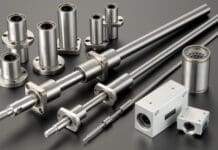
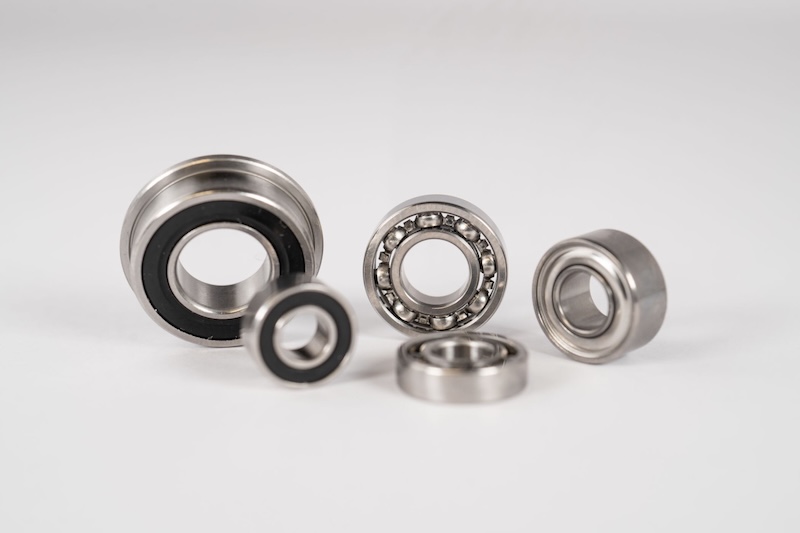
Standard steel bearings can corrode or seize under such conditions. That’s why marine grade bearings, including stainless steel and hybrid ceramic designs, are becoming the preferred choice for marine engineers.
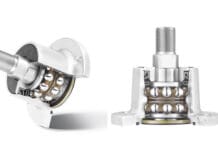
Stainless steel bearings For higher-speed or continuously operating electric drives, hybrid ceramic bearings offer the greatest efficiency and lifespan — resisting wear, minimising friction and maintaining performance even under variable loads.
Meanwhile, hybrid bearings — combining stainless steel races with ceramic rolling elements — offer high stiffness, low weight and exceptional corrosion resistance. They also run cooler and require less lubrication, reducing the risk of contamination and extending service intervals. For higher-speed or continuously operating electric drives, hybrid ceramic bearings offer the greatest efficiency and lifespan — resisting wear, minimising friction and maintaining performance even under variable loads.
Together, these designs help ensure that critical marine equipment runs smoothly, quietly and efficiently in even the harshest conditions.
Performance under pressure
Electrified vessels rely on precision and smoothness. Any excess vibration or friction not only wastes energy but can shorten component life. Low-friction bearings help to maintain consistent torque and minimise losses, enhancing the overall efficiency of propulsion and auxiliary systems.
In high-duty applications such as offshore support vessels, ferries or tugboats — which can complete hundreds of start–stop cycles every week — the benefits of advanced bearings quickly add up in both performance and cost savings.
For example, a hybrid bearing used in an electric ferry’s propulsion motor can maintain smooth operation through thousands of docking manoeuvres without excessive wear, while stainless steel bearings in deck winches or steering gear resist saltwater corrosion and vibration over extended service intervals. Together, these improvements reduce downtime, extend component life and help operators achieve greater energy efficiency across the entire vessel.
A digital lookout
As digitalisation spreads through the marine sector, predictive maintenance is emerging as a key enabler of reliability. Bearings can now be fitted with integrated MEMS-based sensors that continuously monitor parameters such as vibration amplitude, temperature, load and rotational speed. These sensors transmit data wirelessly or via a central monitoring network to onboard or cloud-based systems, where condition-monitoring software analyses patterns in real time.
By detecting subtle changes — like rising vibration frequencies or temperature deviations — engineers can identify imbalance, misalignment or lubrication issues long before they cause damage. For vessels where downtime means lost revenue, this data-driven approach is proving invaluable. It also supports sustainability by ensuring components are used efficiently, replaced only when necessary and maintained at optimal performance throughout their service life.
Reducing total cost of ownership
While the upfront cost of advanced bearings may be higher than standard designs, their extended lifespan and reduced maintenance needs often deliver a lower total cost of ownership. When bearings run longer between services, equipment operates more efficiently, reducing energy use and associated emissions.
In ports and coastal operations where electrification projects are expanding — from battery-powered ferries to autonomous harbour craft — the reliability and efficiency of every rotating component counts. Bearings may be small, but they can make a big difference to operational uptime and environmental impact.
SMB Bearings supplies stainless steel, ceramic and hybrid bearings designed specifically for corrosive or high-load environments. Whether for electric propulsion, deck machinery or onboard auxiliary systems, its components help shipbuilders and operators achieve smoother, quieter and more efficient performance.
Marine electrification is transforming how vessels move — but it’s precision engineering that keeps them moving. With the right bearings in place, operators can set sail confidently on the journey to a cleaner, more sustainable future.
To learn more about how SMB Bearings’ speciality industrial bearings are helping the shipping industry deliver under pressure, visit its website.